
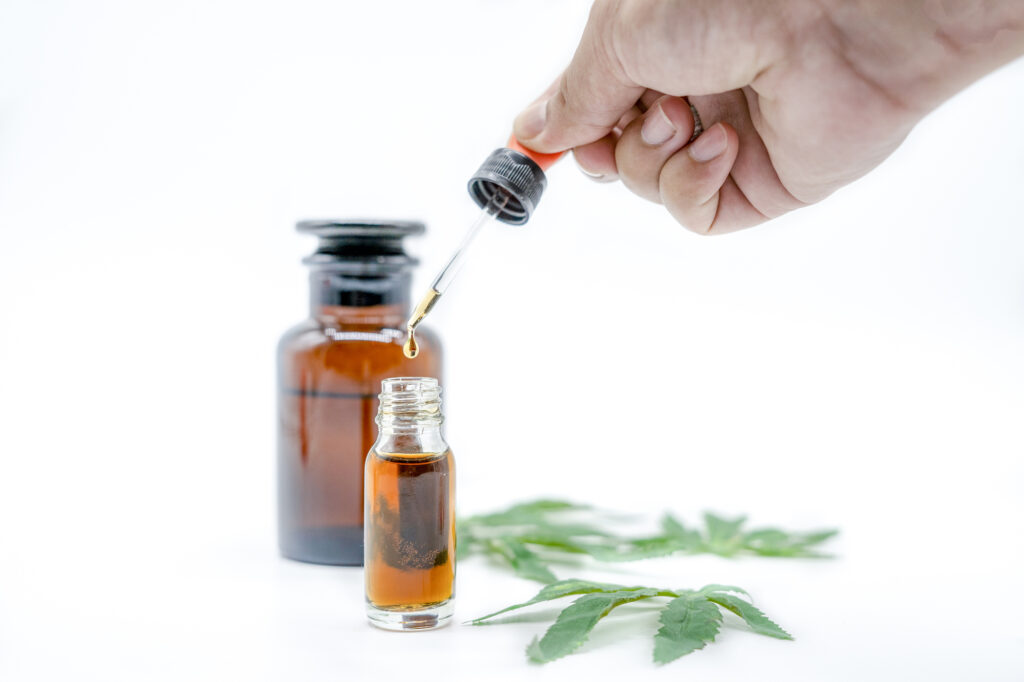
If you are new to CBD oil, you may wonder what is actually inside the bottle. Many products use terms such as hemp extract, cannabidiol, carrier oil, full-spectrum, broad-spectrum, and CBD isolate, but understanding these ingredients can make it easier to choose a product that matches your preferences.
CBD oil is not simply “hemp in a bottle.” Manufacturers combine CBD-rich hemp extract with a carrier oil and may include additional ingredients depending on the product’s formulation. The final composition can vary significantly from one CBD oil to another.
In this guide, we will explain what CBD oil is made from, the main ingredients you may find on a CBD oil label, how different types of CBD extracts affect the product, and what to check before buying.
What Is CBD Oil?
CBD oil is a product that typically combines cannabidiol (CBD) extracted from hemp or cannabis plants with a carrier oil.
CBD is one of many naturally occurring compounds called cannabinoids. Manufacturers extract CBD from plant material and formulate it into different products, including oils, tinctures, gummies, capsules, and topical products.
A basic CBD oil may contain only two main ingredients:
- CBD-rich hemp extract
- Carrier oil
However, some products may contain additional ingredients such as natural flavors, botanical extracts, or other cannabinoids.
Because formulations differ between manufacturers, always check the product’s ingredient list rather than assuming every CBD oil contains the same ingredients.
The Main Ingredients in CBD Oil
Although CBD oils can have different formulations, most products contain some combination of the following components.
1. CBD Extract
The primary ingredient in CBD oil is usually a CBD-rich extract.
Manufacturers obtain this extract from hemp or cannabis plant material using an extraction process designed to separate cannabinoids and other desirable plant compounds.
Depending on how the manufacturer processes the extract, it may contain:
- CBD
- Other cannabinoids
- Terpenes
- Flavonoids
- Other naturally occurring plant compounds
- Trace amounts of THC, depending on the product
The final cannabinoid profile depends on the plant material, extraction method, purification process, and formulation.
2. Cannabidiol (CBD)
Cannabidiol, commonly called CBD, is the specific cannabinoid that gives CBD oil its name.
When you see a product advertised as containing 500 mg, 1,000 mg, or 2,000 mg of CBD, that number generally refers to the total CBD content in the stated product quantity.
For example, if a 30 mL bottle contains 1,000 mg of CBD, the approximate concentration is:
1,000 mg ÷ 30 mL = 33.3 mg of CBD per mL
This distinction is important because the amount of CBD per bottle is different from the amount of CBD per serving.
3. Carrier Oil
CBD extract is often highly concentrated, so manufacturers typically combine it with a carrier oil.
The carrier oil helps create a suitable liquid formulation and makes it easier to measure and use the CBD product.
Common carrier oils include:
- MCT oil
- Hemp seed oil
- Olive oil
- Coconut-derived oils
The choice of carrier oil can affect the taste, texture, and overall formulation of the product.
MCT Oil
MCT stands for medium-chain triglycerides.
MCT oil is commonly used in CBD products because it has a relatively neutral taste and works well as a liquid carrier.
Many CBD tinctures use MCT oil as the base.
Hemp Seed Oil
Hemp seed oil comes from hemp seeds. It contains various nutritional compounds, including fatty acids, but it is not the same thing as CBD-rich hemp extract.
This distinction is important.
A product containing hemp seed oil does not automatically contain a meaningful amount of CBD.
Olive Oil
Some CBD manufacturers use olive oil as a carrier because it provides a familiar, food-based oil with its own nutritional characteristics.
The choice between MCT oil, olive oil, hemp seed oil, or another carrier depends on the manufacturer’s formulation.
4. Full-Spectrum Hemp Extract
Some CBD oils contain full-spectrum hemp extract.
Full-spectrum extracts are designed to retain CBD along with other naturally occurring hemp compounds.
Depending on the product, these may include:
- CBD
- Other cannabinoids
- Terpenes
- Flavonoids
- Trace THC
The exact composition varies from product to product.
If you are considering full-spectrum CBD oil, check the cannabinoid profile and laboratory testing information to understand what the finished product contains.
5. Broad-Spectrum Hemp Extract
Broad-spectrum CBD oil generally contains CBD and other hemp compounds but is formulated to remove or minimize THC.
A broad-spectrum product may still contain various cannabinoids and terpenes.
However, consumers should not assume that every broad-spectrum product has exactly the same cannabinoid profile.
If avoiding THC is important to you, check the product’s laboratory report for specific information about THC content.
6. CBD Isolate
CBD isolate is a purified form of CBD that is intended to contain primarily cannabidiol without the other cannabinoids and plant compounds found in full-spectrum extracts.
A CBD oil made with isolate may have a simpler cannabinoid profile than a full-spectrum product.
You may see terms such as:
- CBD isolate
- Pure CBD
- Isolated cannabidiol
If you want to know which type of CBD extract a product uses, check the label carefully.
7. Other Cannabinoids
CBD is not the only cannabinoid found in hemp.
Depending on the extraction method and product type, CBD oil may contain other cannabinoids, including:
- CBG
- CBC
- CBDA
- THC
- THCA
The presence and amount of these compounds can vary considerably.
Some products intentionally preserve a broader range of cannabinoids, while CBD isolate products focus primarily on CBD.
A Certificate of Analysis (COA) can provide more detailed information about the cannabinoid profile.
8. Terpenes
Terpenes are aromatic compounds naturally found in many plants, including hemp.
They contribute to the characteristic aromas and flavors associated with different plants.
Some full-spectrum CBD oils naturally retain terpenes from the hemp plant. Other products may have terpenes added during formulation.
If a product advertises a particular terpene profile, check the ingredient information and laboratory documentation where available.
9. Flavonoids
Flavonoids are naturally occurring plant compounds found in many fruits, vegetables, herbs, and other plants.
Hemp contains naturally occurring flavonoids, and some may remain in minimally processed extracts.
However, the amount found in a finished CBD oil depends on the plant material and manufacturing process.
10. Natural Flavors
Not every CBD oil has a strong flavor that consumers enjoy.
Some manufacturers add natural flavors to make the product more pleasant to use.
Common flavor profiles may include:
- Mint
- Citrus
- Berry
- Vanilla
- Natural botanical flavors
If you have allergies or dietary restrictions, review the full ingredient list instead of relying only on the flavor name displayed on the front of the bottle.
11. Artificial Flavors
Some CBD oils may contain artificial flavoring ingredients.
Others may be completely unflavored or use natural flavors.
If you prefer to avoid artificial flavoring, check the ingredient panel before purchasing.
The terms “natural” and “artificial” describe different types of flavoring ingredients, but neither term alone tells you whether a product is appropriate for your individual needs.
12. Botanical Ingredients
Some CBD oil formulations include additional botanical ingredients.
These may be added for flavor, aroma, or product positioning.
Examples can include various plant extracts or essential oils.
When a CBD product contains multiple botanical ingredients, read the label carefully to understand the complete formulation.
CBD Oil vs Hemp Seed Oil
One of the most common sources of confusion involves CBD oil and hemp seed oil.
Although both can come from hemp, they are not the same product.
CBD oil typically contains CBD-rich hemp extract, while hemp seed oil comes from hemp seeds.
Hemp seed oil can be a nutritious plant-based oil, but hemp seeds naturally contain little to no CBD.
Therefore, seeing the word “hemp” on a bottle does not automatically mean that the product contains CBD.
Always check the actual CBD content listed on the label.
How Is CBD Extract Obtained From Hemp?
Before manufacturers can make CBD oil, they need to obtain CBD-rich extract from plant material.
Several extraction methods can be used in the CBD industry.
1. CO₂ Extraction
Supercritical CO₂ extraction uses carbon dioxide under controlled pressure and temperature conditions to extract compounds from hemp.
Manufacturers can adjust the extraction process to target different plant compounds.
2. Ethanol Extraction
Ethanol can also be used as a solvent to extract cannabinoids and other compounds from hemp.
After extraction, manufacturers process the material to remove unwanted components and create the desired extract.
3. Other Extraction Methods
Other extraction approaches may also be used, depending on the manufacturer and product.
The extraction method is only one part of product quality. Consumers should also consider the final cannabinoid profile, ingredients, testing, and manufacturing standards.
What Happens After Extraction?
CBD extraction is only one step in making CBD oil.
The manufacturer may process the extract further depending on the desired product.
The general process can involve:
Hemp cultivation → Harvesting → Extraction → Filtration or purification → Cannabinoid processing → Formulation → Testing → Bottling
Not every manufacturer follows exactly the same process.
Some extracts undergo additional purification to produce CBD isolate, while others retain more of the naturally occurring plant compounds.
Why CBD Oil Ingredients Matter
Understanding the ingredients helps you compare products more effectively.
For example, two CBD oils might both contain 1,000 mg of CBD but have completely different formulations.
One could contain:
CBD isolate + MCT oil
while another could contain:
Full-spectrum hemp extract + MCT oil
The CBD amount may be similar, but the overall cannabinoid and plant-compound profiles can differ.
This is why looking only at the CBD number is not enough.
How to Read a CBD Oil Ingredient Label
When buying CBD oil, look for the following information.
1. CBD Amount
Check how much CBD the bottle contains and whether the amount refers to the entire bottle or a serving.
2. Extract Type
Look for:
- Full-spectrum
- Broad-spectrum
- CBD isolate
3. Carrier Oil
Check whether the product uses:
- MCT oil
- Hemp seed oil
- Olive oil
- Another carrier
4. Additional Ingredients
Look for flavors, botanical ingredients, sweeteners, or other additives.
5. THC Information
If you want to avoid THC, check the label and laboratory report.
6. Batch Number
A batch or lot number can help you match the product with its laboratory testing.
7. Certificate of Analysis
Look for a current COA when available. It can provide information about cannabinoid concentrations and certain contaminant tests.
What Is a Certificate of Analysis?
A Certificate of Analysis, or COA, is a laboratory report that provides testing information for a particular CBD product or batch.
Depending on the laboratory, the COA may show:
- CBD concentration
- THC concentration
- Other cannabinoids
- Heavy metals
- Pesticides
- Microbial contamination
- Residual solvents
The exact testing panel varies between products.
When possible, check whether the COA identifies the same batch number as the product you are considering.
Does CBD Oil Contain THC?
It depends on the formulation.
Full-spectrum CBD oil may contain trace amounts of THC. Broad-spectrum products are generally formulated to remove or minimize THC, while CBD isolate is intended to contain primarily CBD.
If THC content matters to you, check the laboratory report instead of relying solely on the product description.
CBD and THC regulations also differ by jurisdiction, so always consider the laws that apply where you live.
What Makes a CBD Oil High Quality?
There is no single ingredient that automatically makes one CBD oil “high quality.”
Instead, consider several factors together.
1. Transparent Labeling
The product should clearly identify its CBD content and ingredients.
2. Independent Testing
Look for accessible third-party laboratory testing where available.
3. Batch Information
A batch number helps connect the product with its testing documentation.
4. Clear Manufacturer Information
The manufacturer should provide sufficient information for consumers to identify and contact the company.
5. Appropriate Storage Information
The label should provide relevant storage guidance to help maintain product quality.
6. No Misleading Claims
Be cautious of products making exaggerated claims about treating or curing diseases.
Common CBD Oil Ingredient Mistakes to Avoid
1. Mistaking Hemp Seed Oil for CBD Oil
Hemp seed oil does not provide the same CBD content as CBD-rich hemp extract.
2. Ignoring the Carrier Oil
The carrier oil is a significant part of the final formulation and may matter for people with dietary preferences or sensitivities.
3. Choosing Only by CBD Strength
A higher CBD concentration does not automatically mean a better product.
4. Ignoring THC Content
If you need to avoid THC, check the cannabinoid profile and COA.
5. Skipping the Ingredient List
Always read the complete ingredient panel before purchasing.
Is CBD Oil Made Only From Natural Ingredients?
Not necessarily.
Some CBD oils contain a relatively simple combination of hemp extract and carrier oil. Others may include natural flavors, botanical ingredients, or additional formulation components.
Whether an ingredient is “natural” does not by itself determine whether a product is suitable for you.
The best approach is to read the complete ingredient list and understand what each component does.
How Should CBD Oil Be Stored?
The ingredients in CBD oil can be affected by environmental conditions.
Many manufacturers recommend storing CBD oil away from:
- Direct sunlight
- Excessive heat
- Moisture
- Extreme temperature changes
Always follow the storage instructions printed on the product.
Keeping the bottle properly closed can also help protect the oil from unnecessary exposure to air and contaminants.
What Should Beginners Look for in CBD Oil?
If you are buying CBD oil for the first time, start with the basics.
Choose a product with:
- Clearly stated CBD content
- A transparent ingredient list
- Clearly identified extract type
- THC information
- Batch or lot information
- Accessible laboratory testing where available
- A reasonable expiration or best-before date
- Clear manufacturer information
Do not choose a product solely because it has attractive packaging or a high CBD number.
Also Read: How CBD Oil Fits Into a Holistic Wellness Plan for Dogs
Final Thoughts
So, what is CBD oil made from? In most cases, it consists primarily of CBD-rich hemp extract combined with a carrier oil. Depending on the formulation, it may also contain other cannabinoids, terpenes, flavonoids, natural or artificial flavors, and botanical ingredients.
The type of hemp extract makes a major difference. Full-spectrum CBD oil generally retains a broader range of hemp compounds, broad-spectrum CBD oil is formulated to remove or minimize THC, and CBD isolate products focus primarily on purified CBD.
For beginners, understanding the ingredient list is one of the easiest ways to make a more informed purchasing decision. Check the CBD concentration, extract type, carrier oil, THC information, additional ingredients, batch number, and third-party laboratory testing before choosing a product.
Most importantly, remember that not every product labeled “hemp oil” is CBD oil. Always look beyond the front of the package and read the actual ingredients and cannabinoid information.